Skeptical Pillars Series (2026) For private viewing only
Stacked image presences formed from AI-derived variants of digital montages.
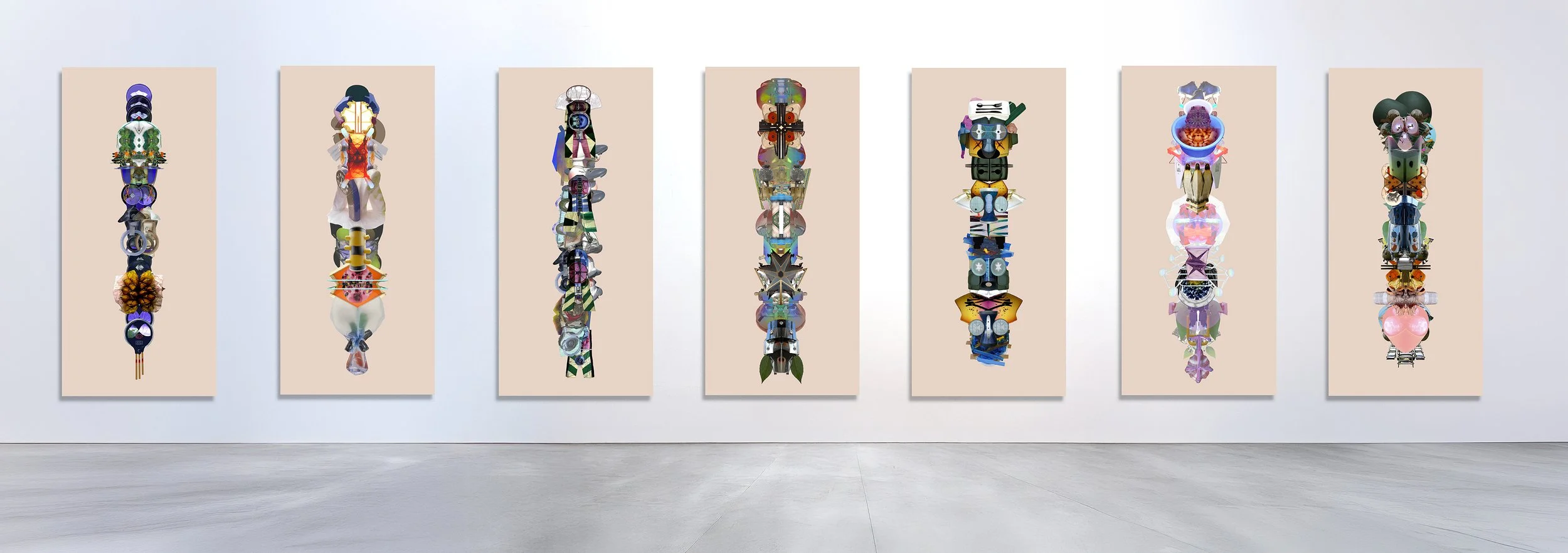
Skeptical Pillars
2026–
Archival pigment prints on paper, mounted on aluminium composite panels (Dibond)
Dimensions variable
Series of nine works
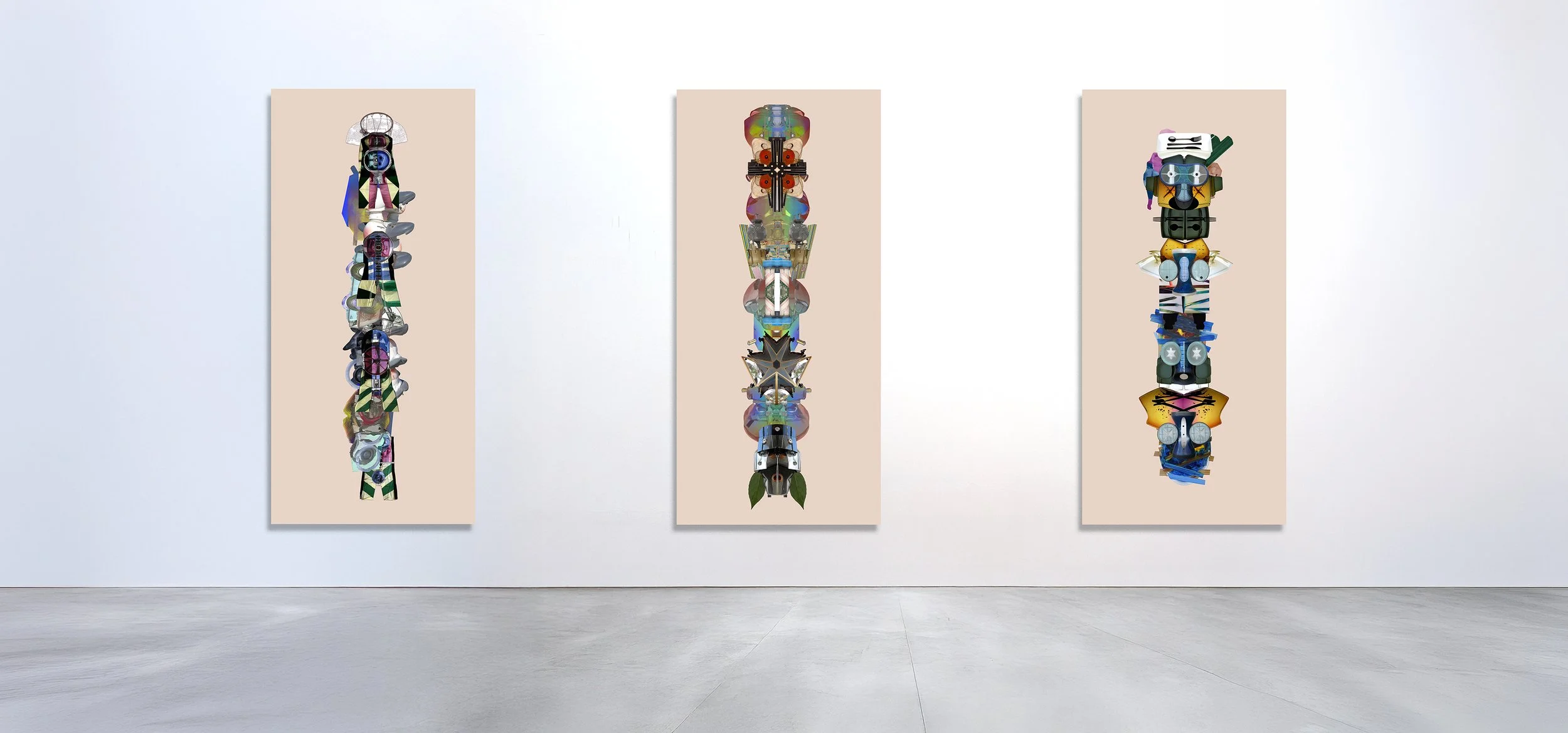
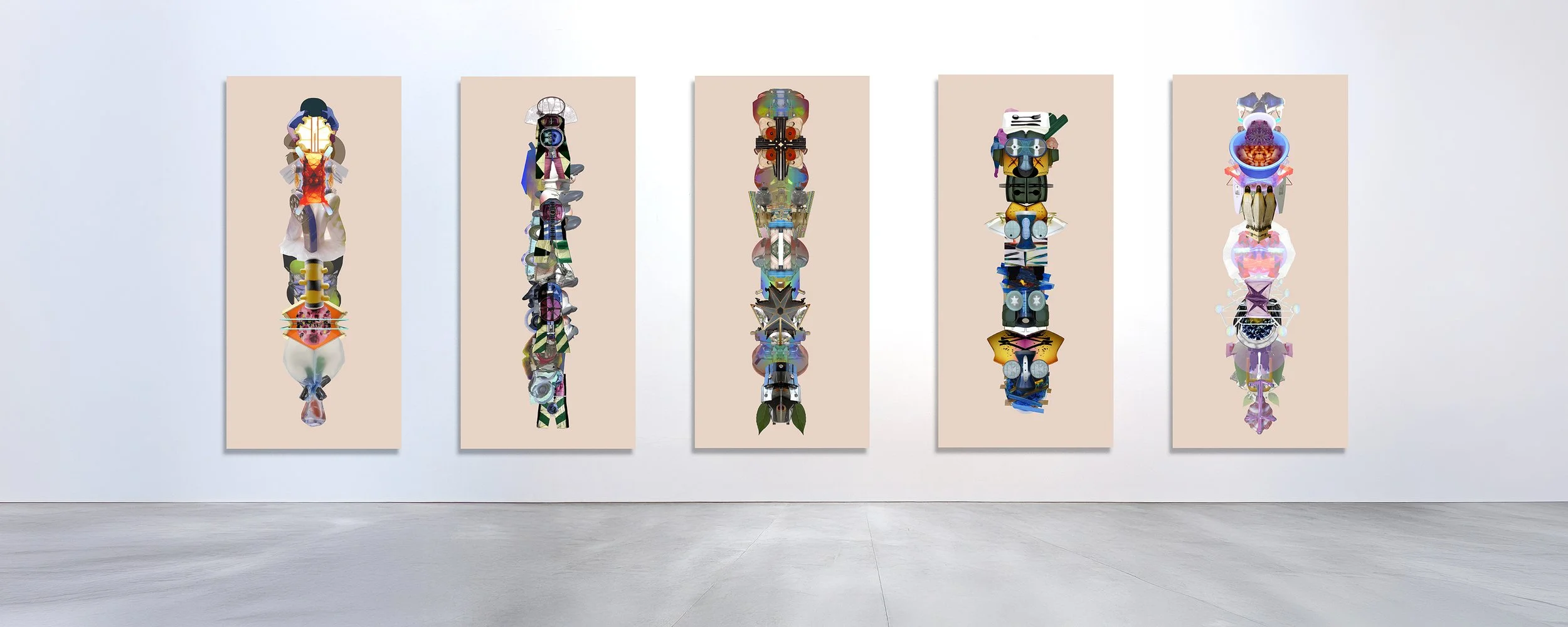
* Designed for flexible presentation in single, paired, or grouped configurations.
INDIVIUAL WORK
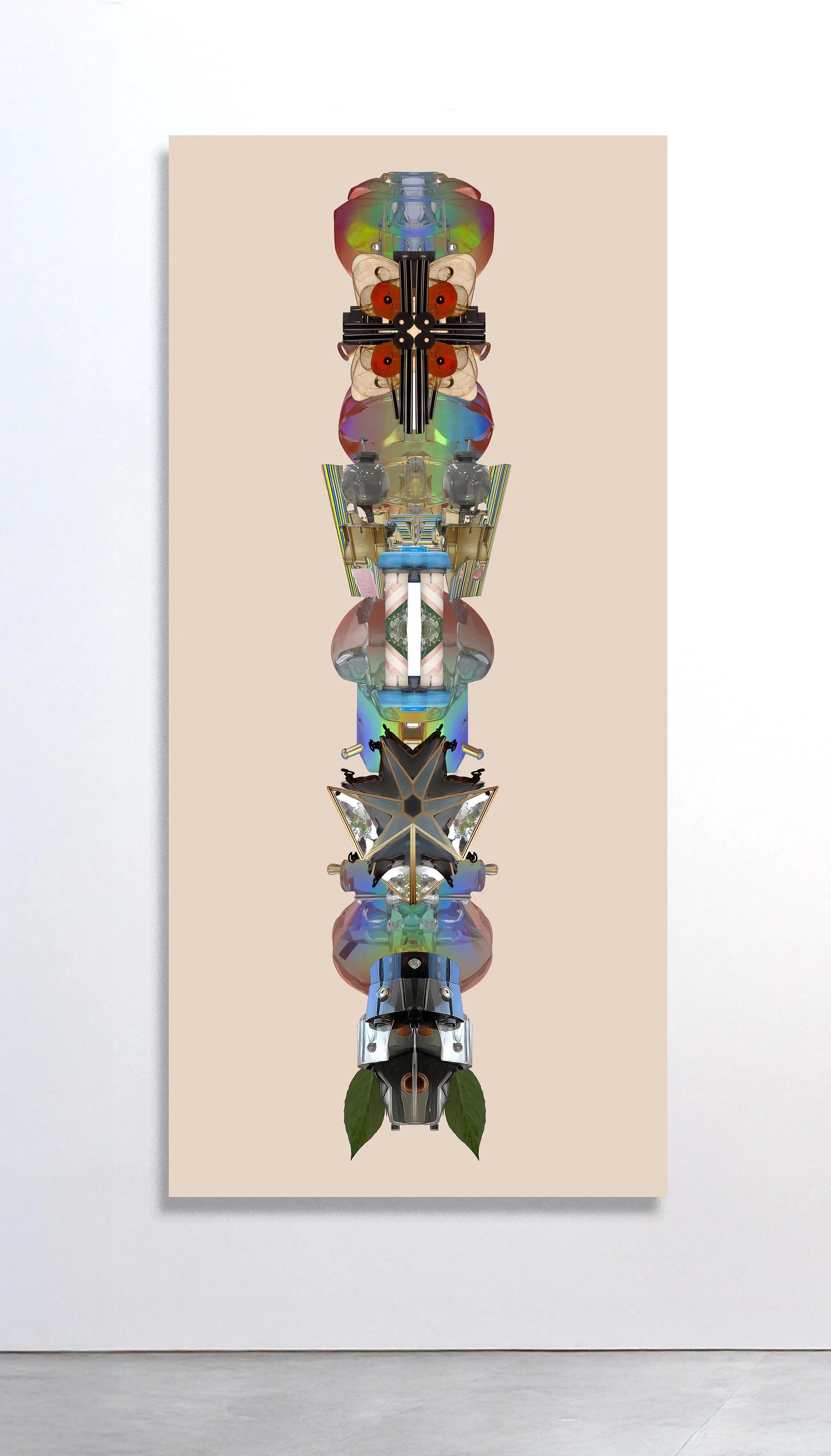
Skeptical Pillars (Chime)
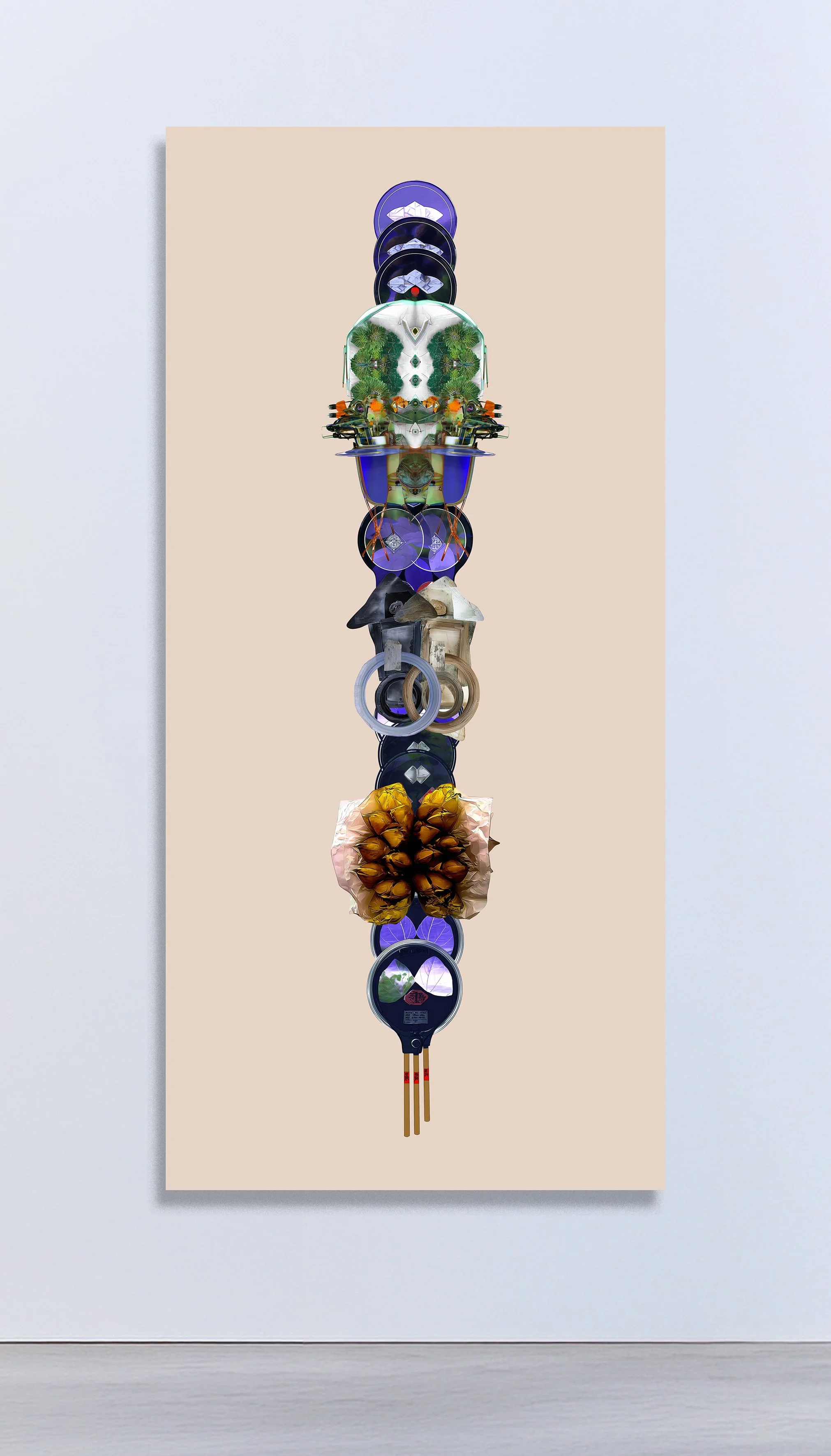
Skeptical Pillars (Mulberry)
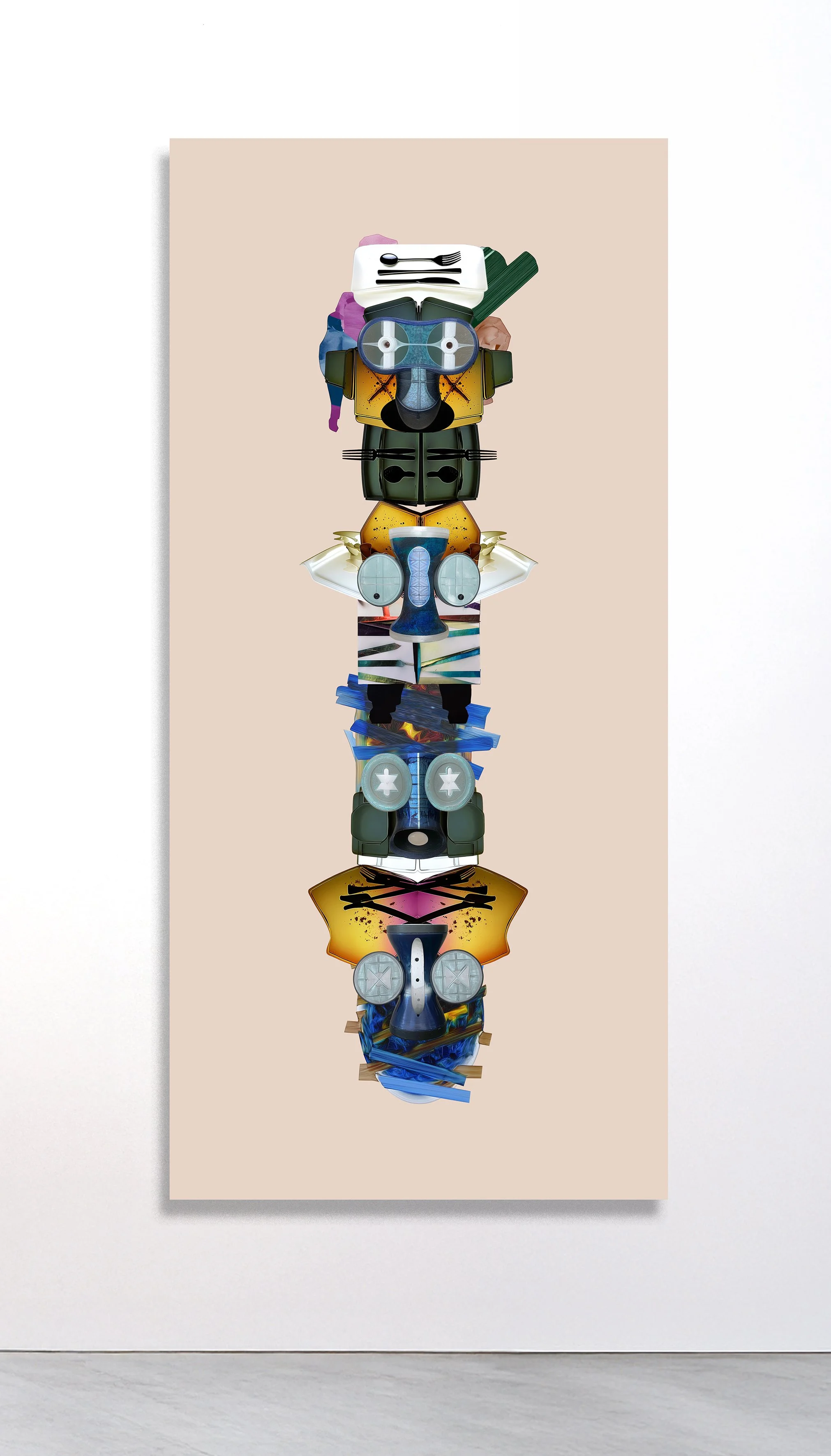
Skeptical Pillars (Anvil)
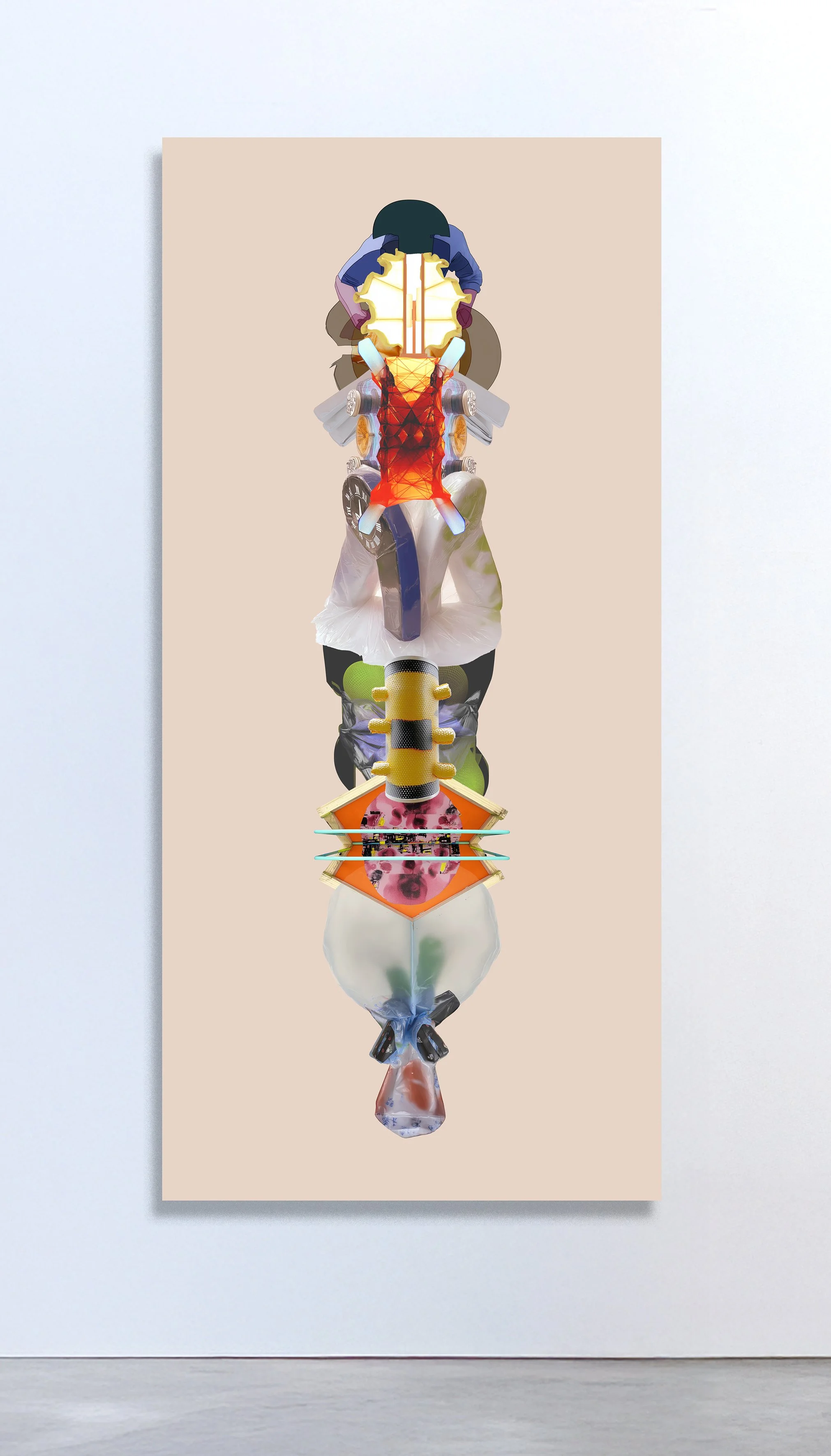
Skeptical Pillars (Loam)
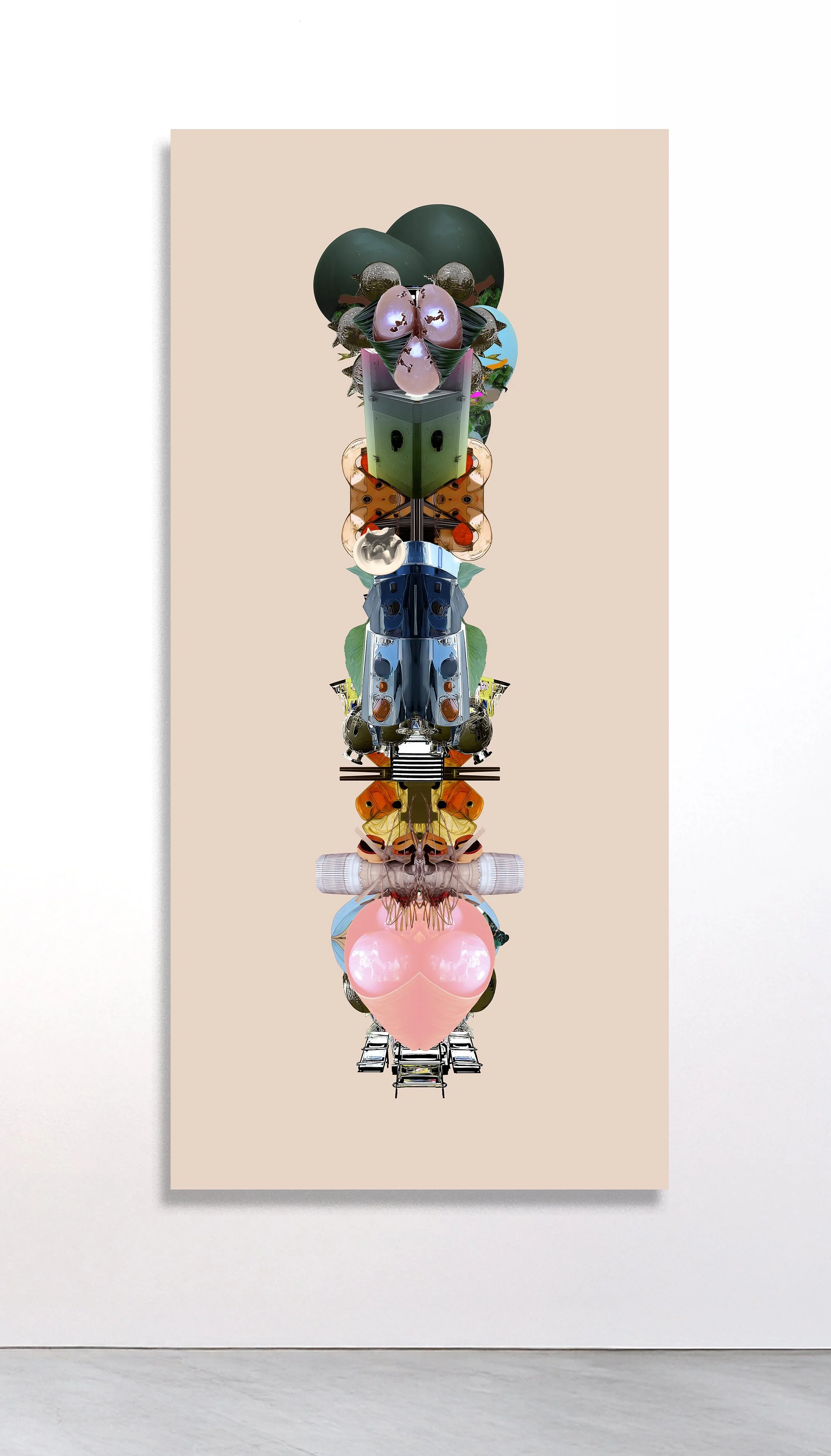
Skeptical Pillars (Buffer)
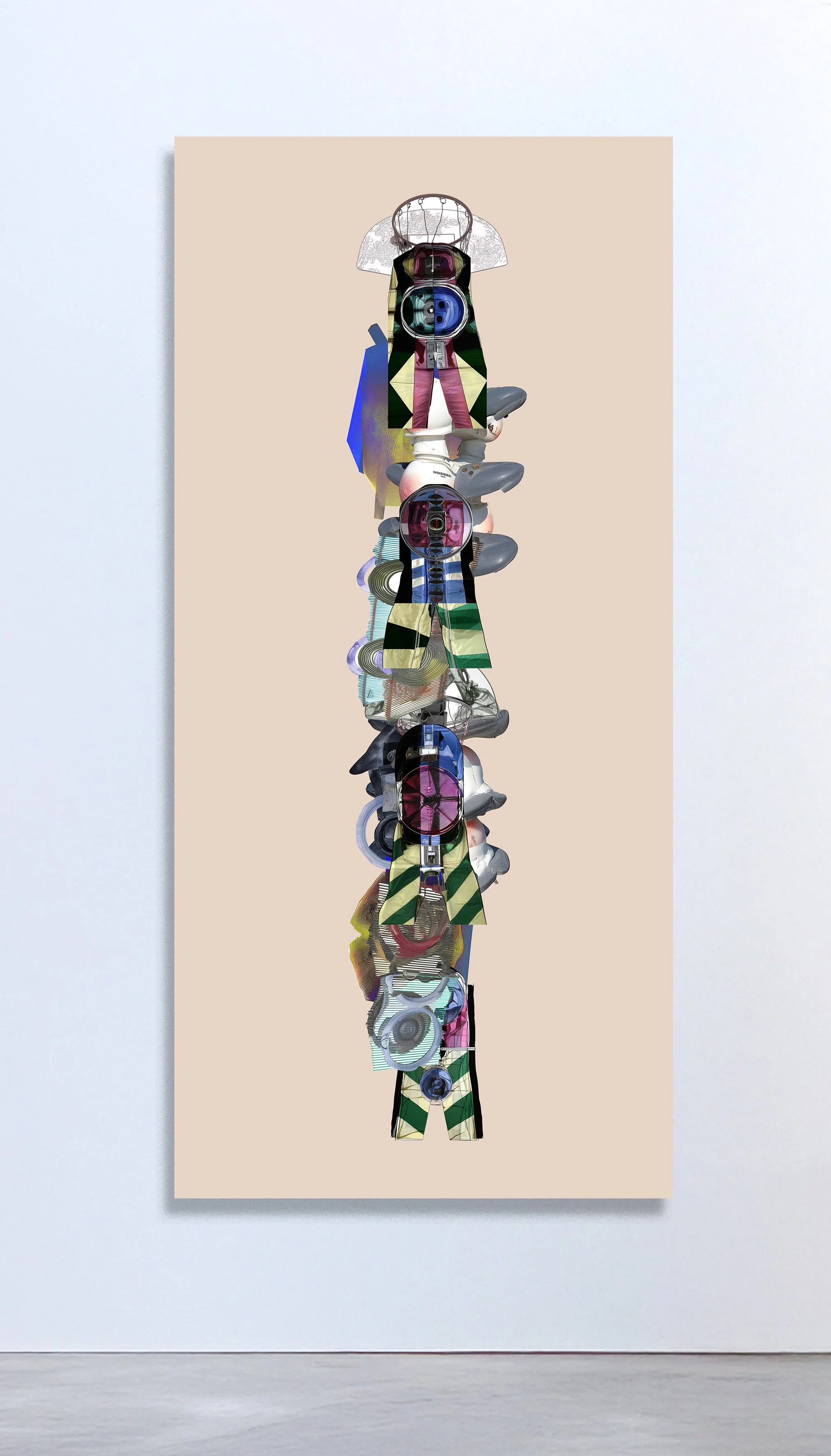
Skeptical Pillars (Baste)
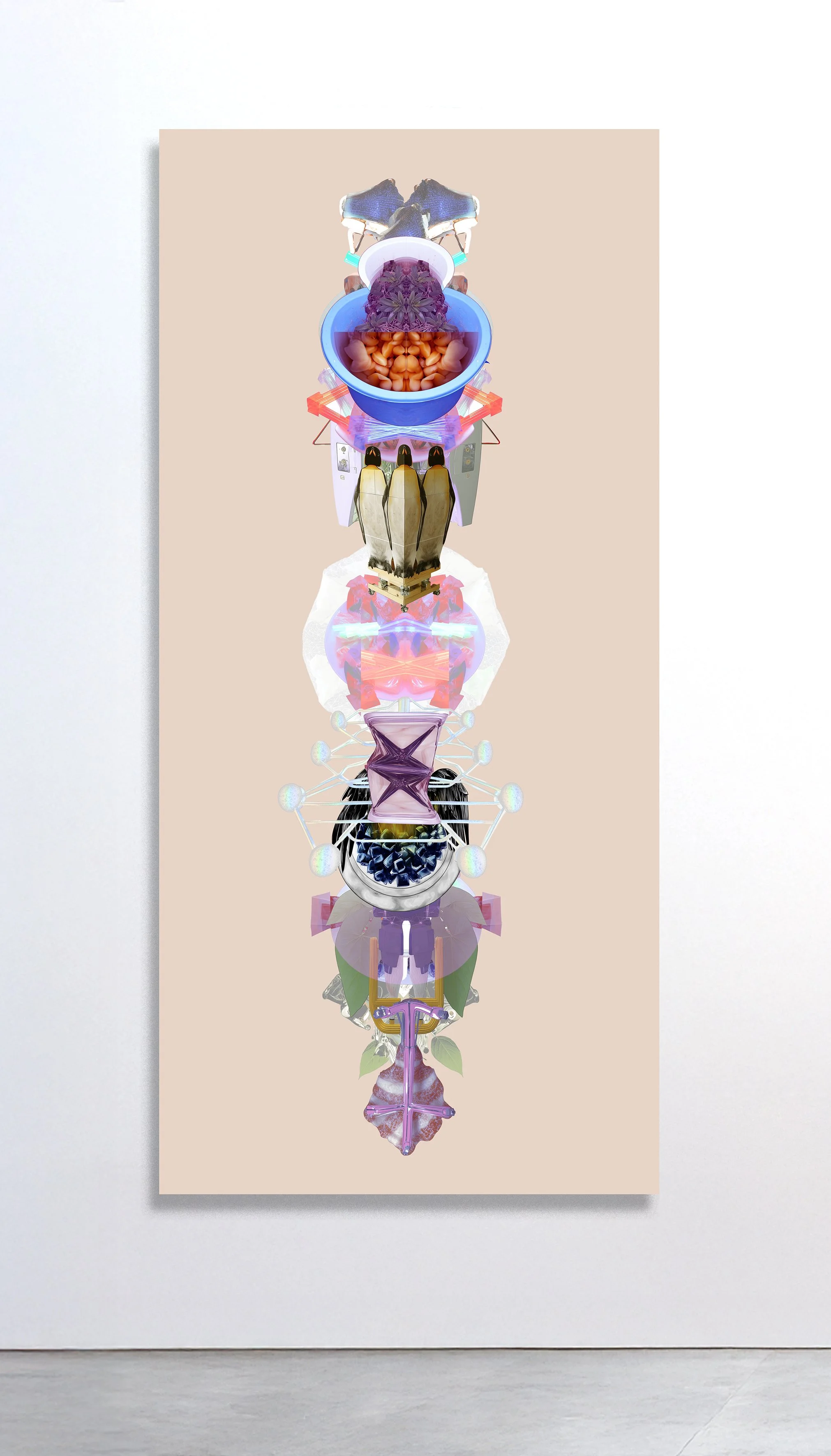
Skeptical Pillars (Sweeper)
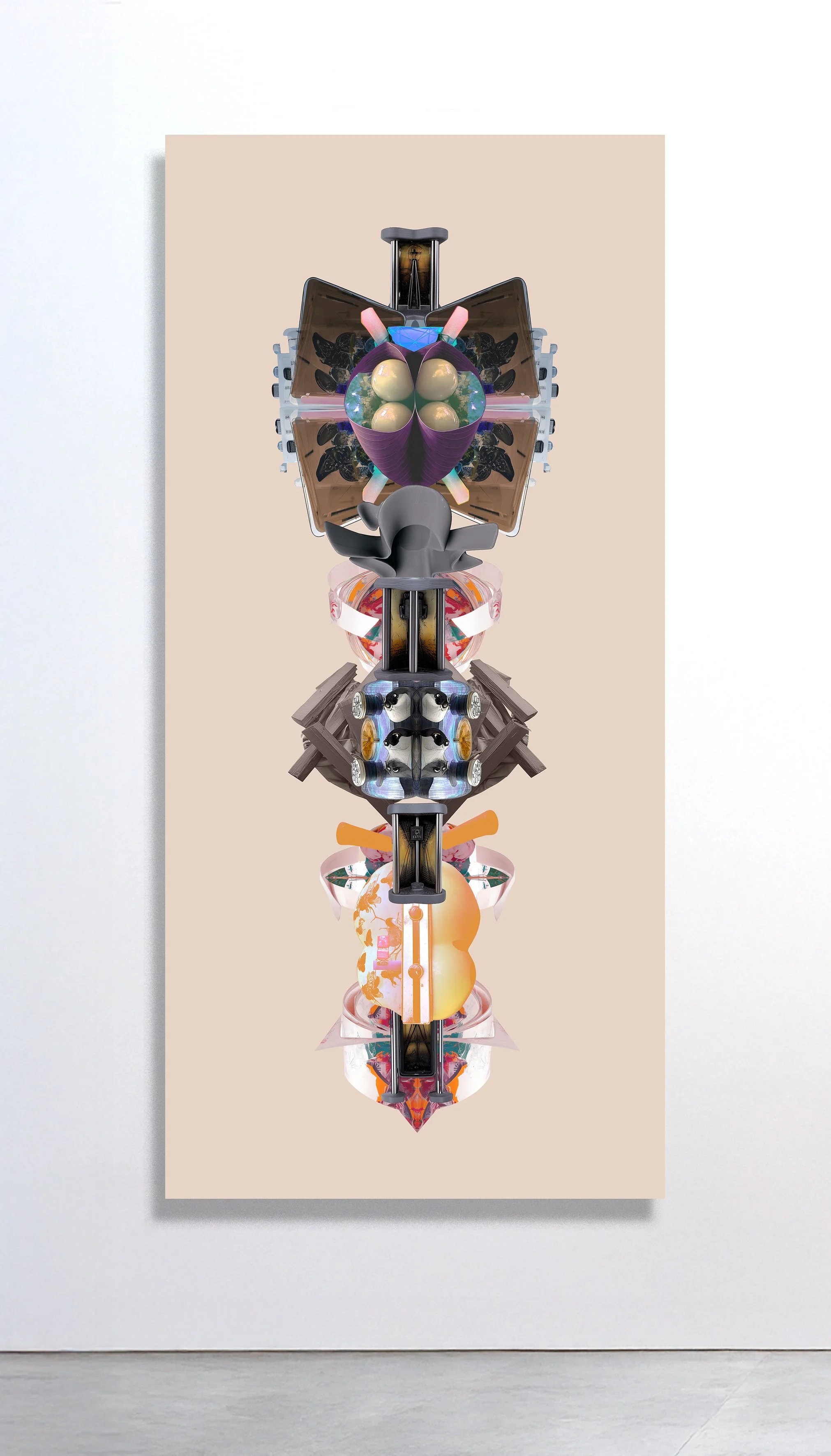
Skeptical Pillars (Contour)
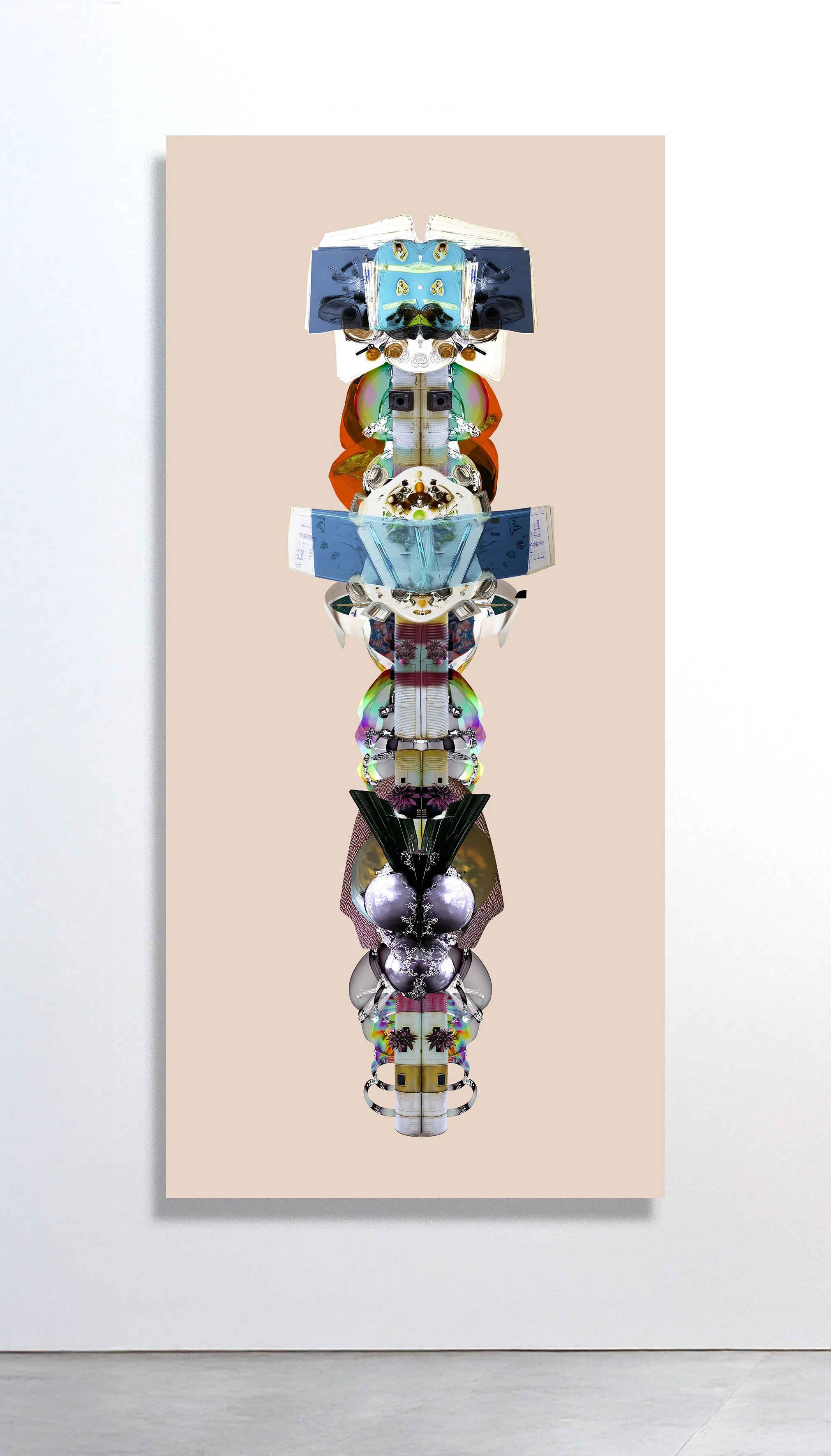
Skeptical Pillars (Furrow)
Installation Examples
Skeptical Pillars — Installation and Grouping Examples
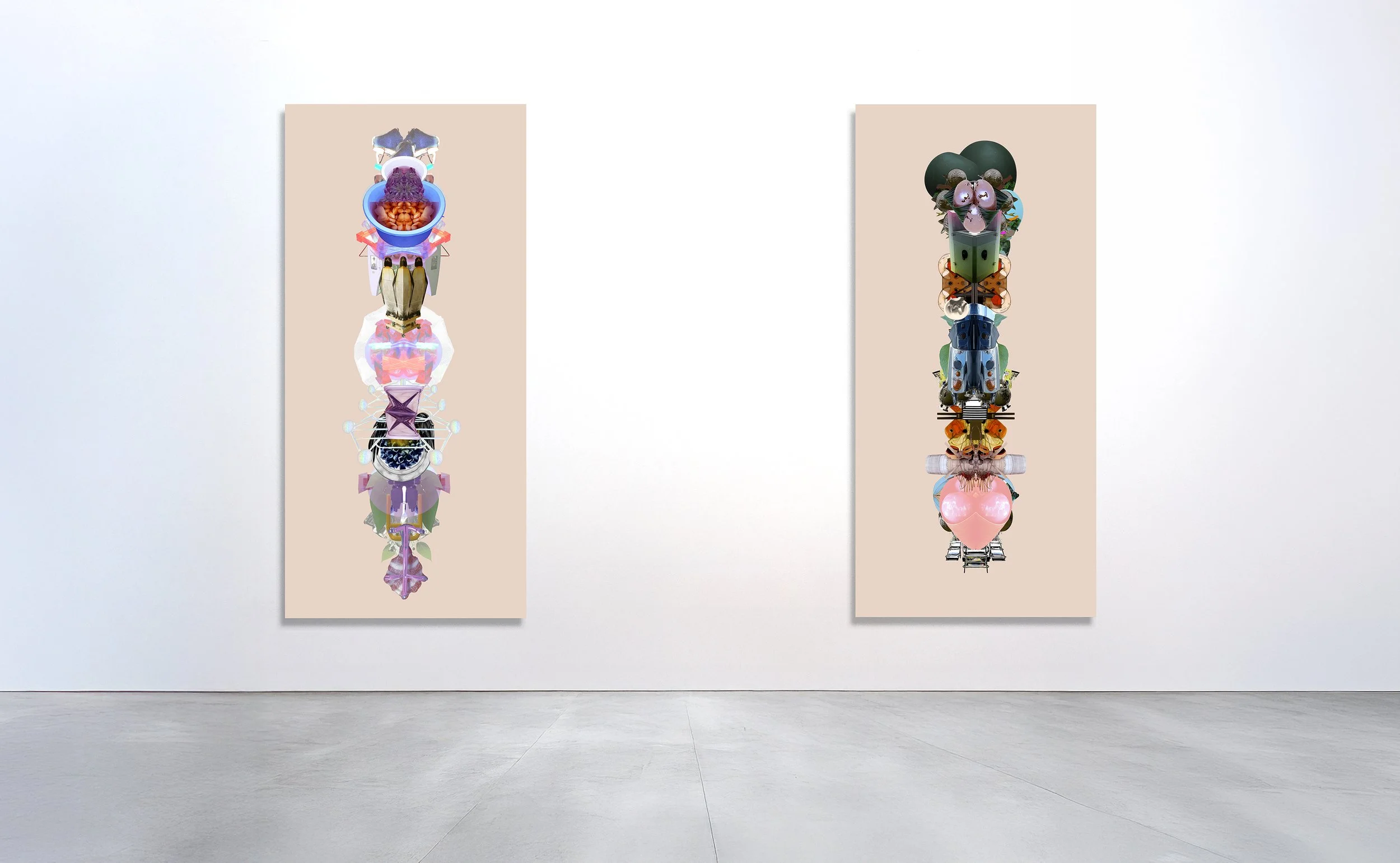
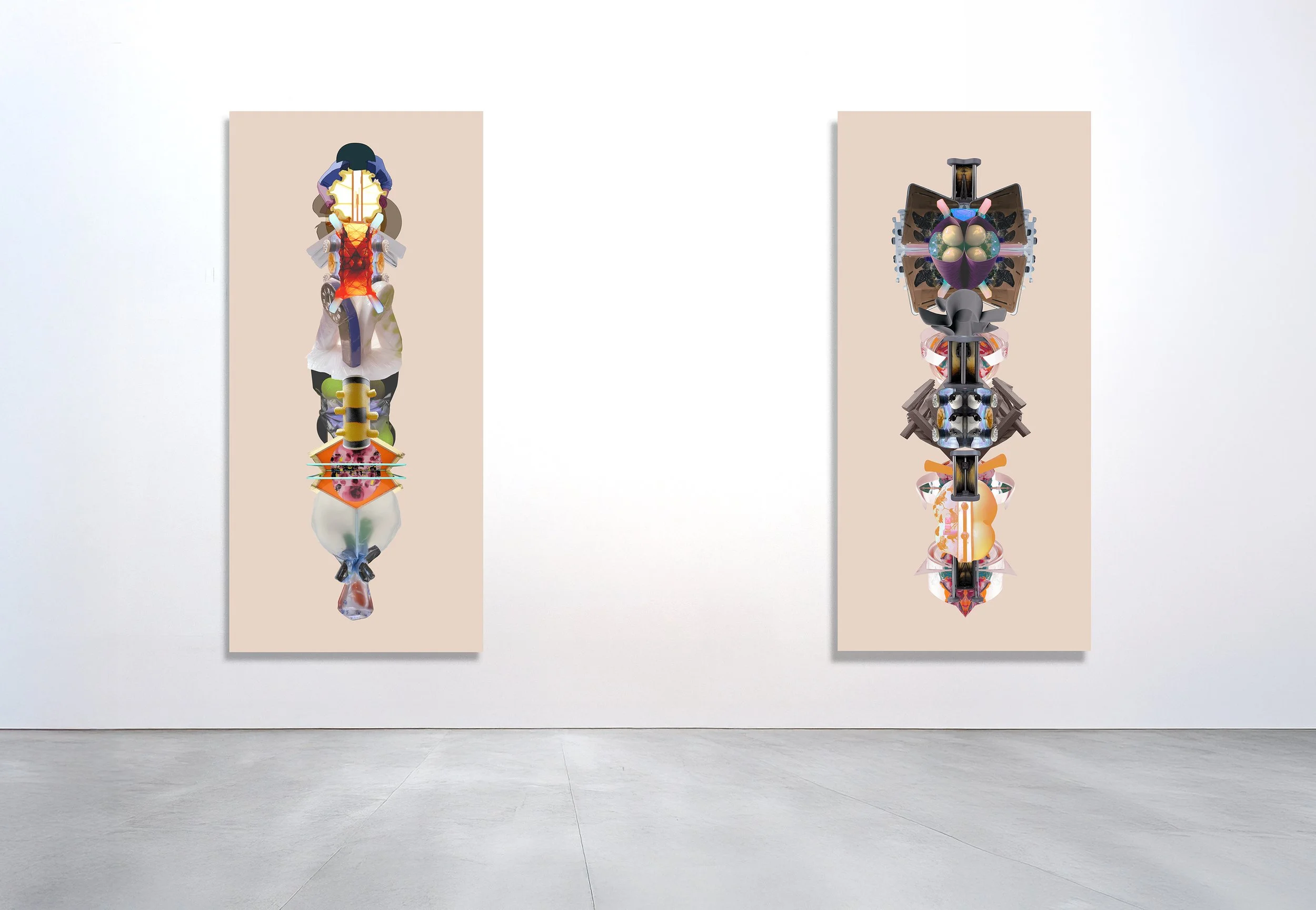
Skeptical Pillars (Summary)
Skeptical Pillars (2026–) is a series of vertically assembled image structures derived from AI-generated variants of the artist’s digital montage archive (2003–2020).
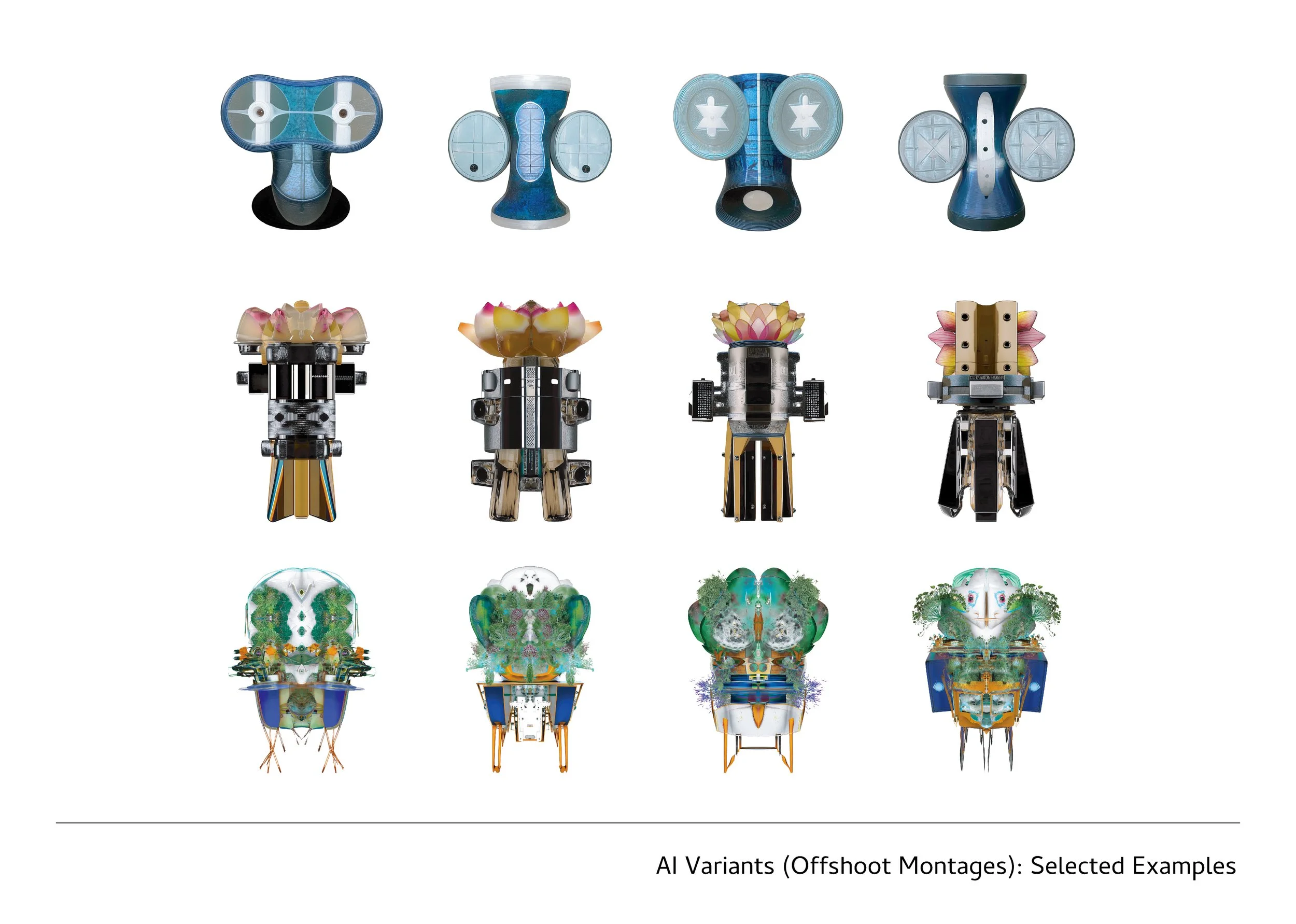
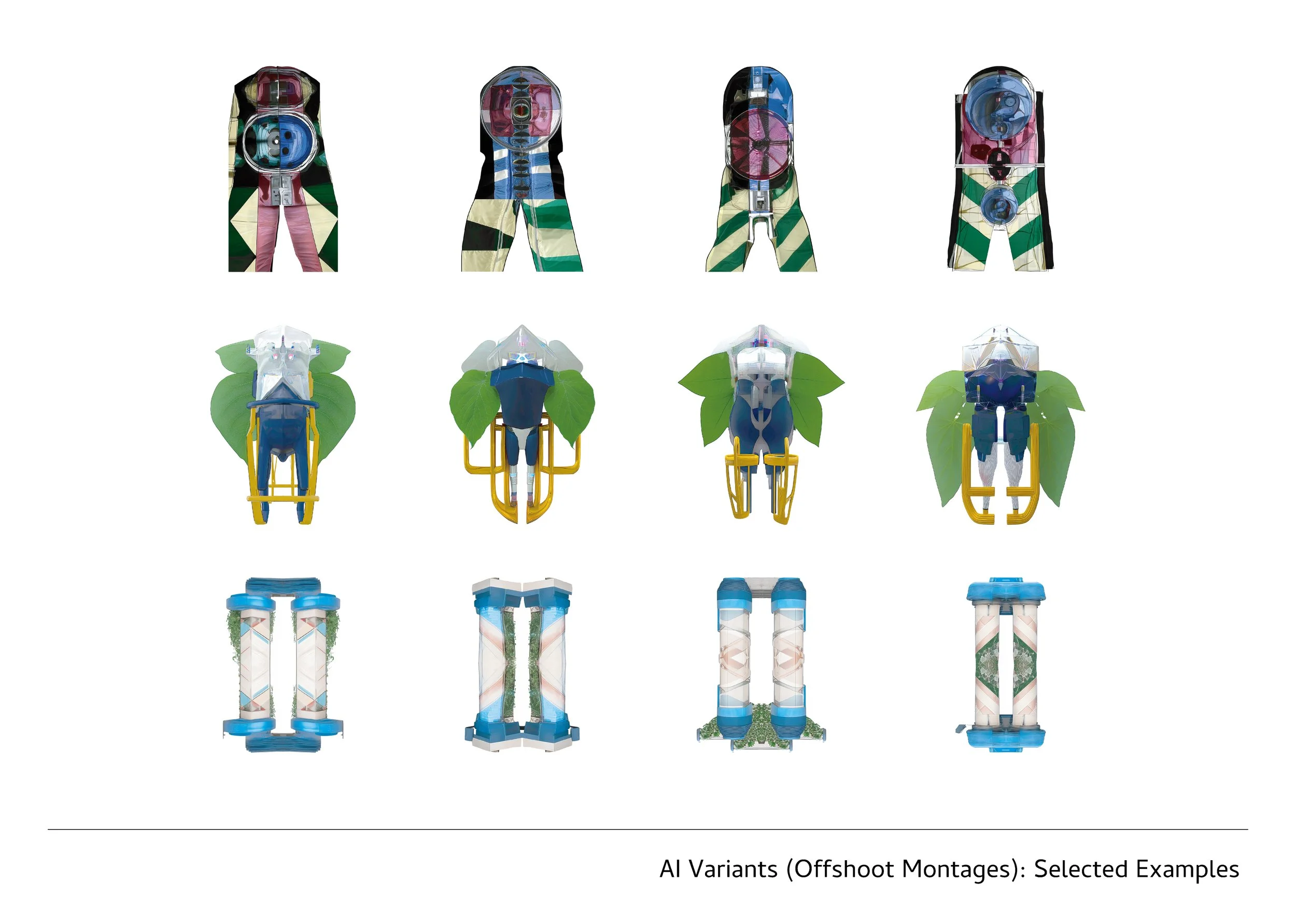
Using Midjourney’s AI Blend command, selected progenitor montages are combined to produce offshoot image variants. Rather than functioning as final outputs, these variants are treated as modular units—elements that retain a traceable lineage to their source montages.
Through a process of selection and recomposition in Photoshop, these units are vertically stacked to form composite structures that read simultaneously as image, structure, and architecture, taking on an emblematic pillar-like presence.
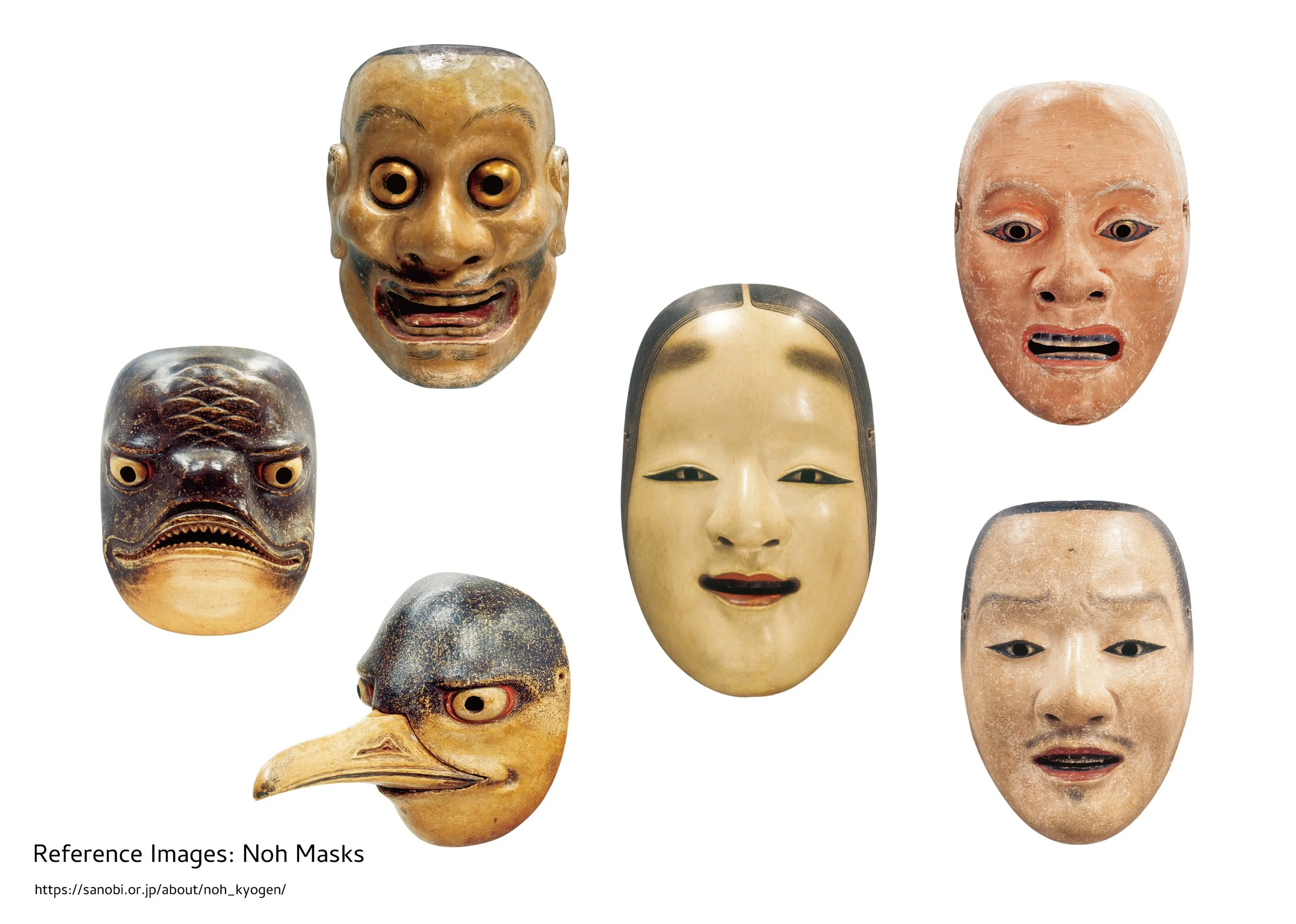
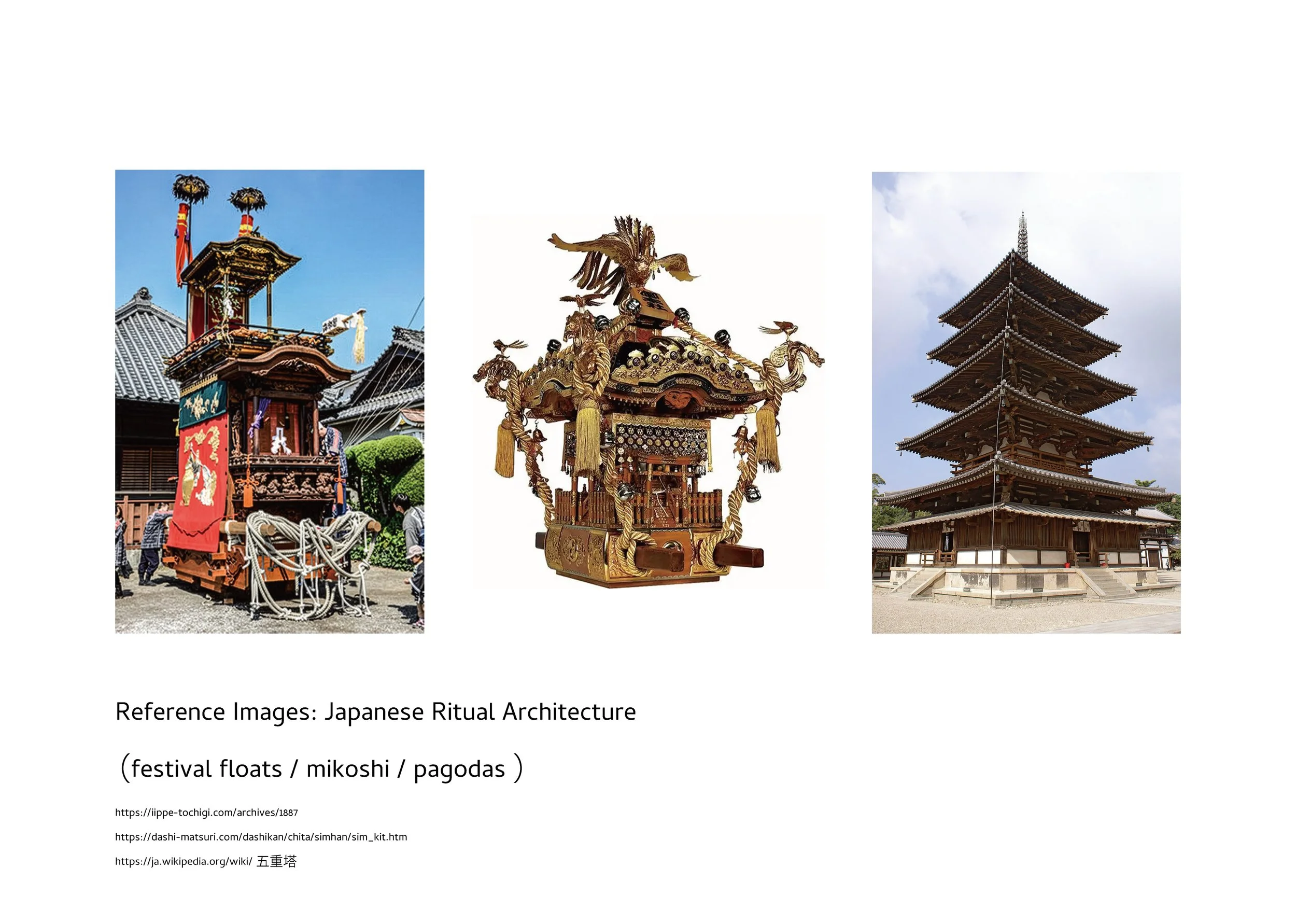
Visually, the works resonate with the layered logic of Japanese ritual forms such as mikoshi, festival floats, and pagodas, while also recalling the shifting ambiguity of Noh masks. The resulting structures sustain multiple presences within a single vertical system.
Situated between digital lineage, ritual architecture, and quasi-spiritual imagery, Skeptical Pillars explores how contemporary image-making can organise multiplicity in an era shaped by AI, uncertainty, and invisible forces.
*Further conceptual context is provided in the extended text at the end of this page
PROGENITOR MONTAGE EXAMPLE

SELECTED AI VIBRANTS (OFFSHOOT MONTAGES)
LINEAGE DIAGRAM

REFERENCE IMAGES (NOH MASKS / MIKOSHI / FESTIVAL FLOAT (DASHI) / AND PAGODA)
Skeptical Pillars
AI Variants / Mask Architecture / Quasi-Spiritual Structures
Skeptical Pillars is a body of work developed in 2026, centred on AI-derived image lineage, vertical assemblage, and quasi-spiritual structures.
Overview
Skeptical Pillars is a series of vertically assembled image-structures built from AI-generated variants derived from earlier digital montages. These variants are produced through Midjourney’s AI Blend command, which combines selected progenitor montages drawn from the artist’s digital archive (2003–2020).
Rather than functioning as finished images, the AI variants operate as modular units—offshoots that retain a traceable lineage to their progenitors. Selected variants are assembled in Photoshop into vertical composite structures that read simultaneously as image, structure, and architecture.
Many progenitor montages are chosen for their symmetrical balance, lending them a mask-like presence reminiscent of Noh masks. When vertically accumulated, the resulting compositions form structures in which multiple visual entities coexist, contend, and accumulate without resolving into a single identity.
Process
At the base of this body of work lies a reservoir of digital montages (2003–2020), assembled from self-shot snapshots, each photograph carrying date-and-place metadata. From this archive, selected images function as progenitor montages for Midjourney’s AI Blend command.
These progenitors are chosen for their symmetrical structures, which often lend them a mask-like presence reminiscent of Noh masks, allowing them to serve as generative starting points for the AI process. They are conceived as nonbinary entities tied to my physical life and timeline—constellations assembled from encounters, objects, and fragments indexed by timestamps, where chronology is re-mapped into parallel formations rather than a single linear account.
Through Midjourney’s Blend command, these progenitors produce AI variants—digital offshoots that branch from shared origins while remaining anchored in the lineage of the montage series.
In this process, AI does not simply generate images; it acts as a catalytic environmental factor, accelerating mutation within the image lineage and producing blended states in which external influences are folded into the structure. The resulting variants therefore emerge not as pure extensions of the progenitors, but as hybridised formations in which inherited structure and outside interference coexist within the same visual field.
These offshoot montages are not treated as finished images but as provisional births: units with traceable ancestry held in reserve for selection and recomposition.
In recent works, these variants are treated as modular elements—digital building materials. By vertically assembling numerous offshoots drawn from different progenitor pairings, each work evolves into a composite entity that reads simultaneously as structure and architecture, taking on an emblematic vertical presence.
Although its constituent units originate through an AI-involved process, the resulting form is not itself AI-generated; it emerges through an alchemical act of artistic construction.
AI generates the conditions of variation, while the final structure is shaped through the artist’s act of selecting, stacking, and recomposing image-units in Photoshop.
Cultural Context
Many variants retain the bilateral symmetry inherited from their progenitors, reinforcing their mask-like quality. In Noh theatre, a mask does not represent a single fixed identity; its expression shifts with angle and light, allowing multiple emotional states to coexist within the same face.
Likewise, these variants behave as mask-like units—images that carry lineage yet remain open to multiple interpretations.
When assembled as Skeptical Pillars, these fragments do not resolve into a singular identity. Instead, they form a vertical field of presences in which distinct faces coexist, contend, and resonate with one another. The series thus operates as a form of Mask Architecture, sustaining plurality within a single visual system.
Aesthetically, the structures resonate with the exuberant ornamentation and collective presence of Japanese ritual architectures such as mikoshi (portable shrines), festival floats (dashi), and the vertically layered logic of the pagoda.
In this sense, the series behaves like a chimera of ritual forms: part spirit-bearing vessel, part communal festival architecture, and part cosmological tower organised along a vertical axis of modular stacking.
At the same time, the works carry a contrasting stillness akin to the yūgen of Noh and the quiet ambiguity of the Noh mask. Ornament and restraint, exuberance and hush coexist within the same visual field.
Conceptual Context
This tension also reflects a broader condition of quasi-spirituality. In contemporary Japan, fragments of Shinto, Buddhism, Christianity, folk animism, and newer religious movements coexist within everyday life in loosely assembled and often pragmatic ways.
Spiritual references circulate less as doctrinal belief than as cultural residue, atmosphere, or gesture. The spiritual dimension invoked by the work therefore does not assert a stable or orthodox faith. Instead, it occupies an ambiguous territory between the authentic and the simulated—something closer to a quasi- or pseudo-spiritual presence whose authority remains uncertain.
This ambiguity resonates with broader contemporary conditions. Living in Tokyo during the aftermath of the 2011 earthquake and nuclear disaster, I experienced a sudden awareness of invisible forces permeating everyday life. Questions of radiation contamination—where it might accumulate, how it might travel through food, water, soil, or dust—became part of daily decision-making.
Later, the global experience of the COVID-19 pandemic reinforced a similar sensitivity to unseen threats carried through air and proximity. These experiences intensified a perception that contemporary life is increasingly shaped by forces that cannot be directly perceived yet deeply affect the body and environment.
In this sense, Skeptical Pillars operates as a conceptual and aesthetic experiment—an exploratory structure articulated through montage. It reflects a world in which authenticity and simulation, belief and doubt, the visible and the invisible continuously intermingle.
Within this unstable environment, the work becomes a way to organise multiplicity: not resolving images into a singular figure, but allowing presences to appear as layered constellations of potential being.
The resulting structures gesture towards a form of interconnected complexity—an image system in which identities, forces, and meanings remain in dynamic relation rather than collapsing into stable singularity.